
Agra – The City of the Taj
Why Agra Is Important to Visit
Agra represents the glory of the Mughal era and stands as one of India’s most recognized cultural and historical destinations. It attracts millions of domestic and international tourists every year and forms the backbone of India’s Golden Triangle tourism circuit.
Importance of Famous Places
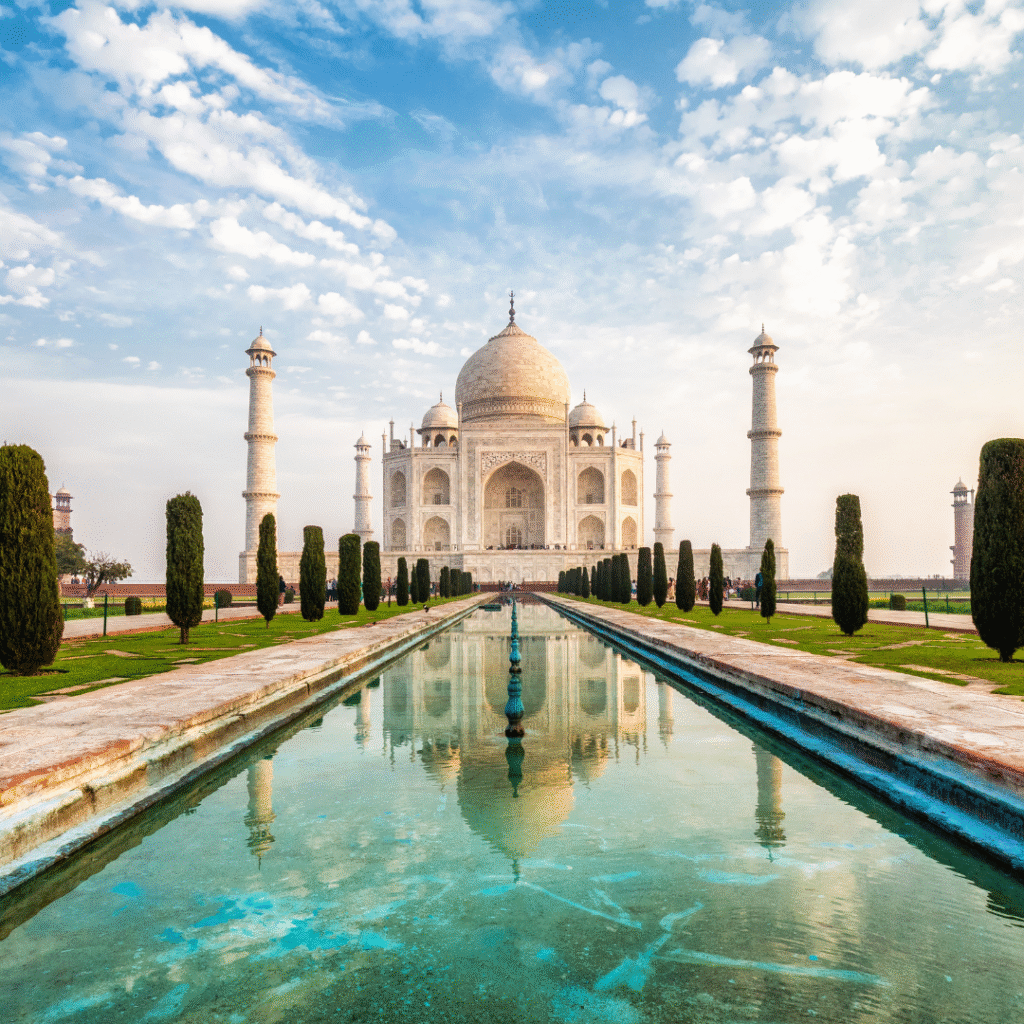
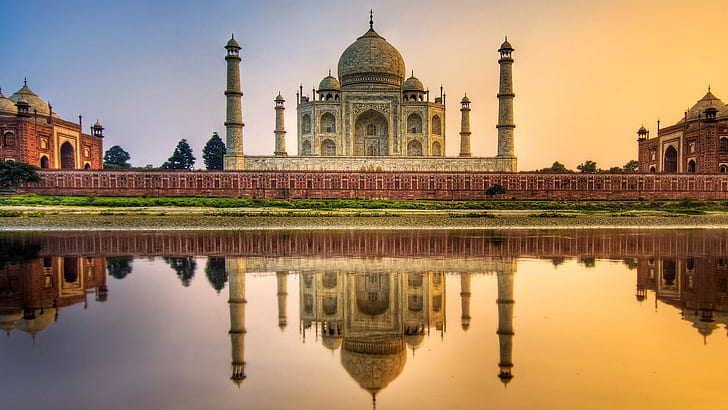
• Taj Mahal – A global symbol of love, architectural excellence, and craftsmanship. Visiting the Taj Mahal offers a once-in-a-lifetime experience of India’s artistic and historical legacy.
• Agra Fort – A UNESCO World Heritage Site that reflects Mughal power, governance, and royal lifestyle through its palaces and courtyards.
• Fatehpur Sikri – A perfectly planned historic city that showcases Mughal urban planning, religious harmony, and monumental architecture.
• Mehtab Bagh – Provides a peaceful and scenic perspective of the Taj Mahal, highlighting Mughal garden design and symmetry.
• Itmad-ud-Daulah (Baby Taj) – Demonstrates the evolution of marble inlay work that later reached its peak in the Taj Mahal.
Importance of Markets
• Sadar Bazaar – Offers a glimpse into local life with traditional shopping, leather goods, and handicrafts.
• Kinari Bazaar – Reflects Agra’s cultural traditions through textiles, wedding items, and decorative materials.
• Taj Ganj Market – Important for tourists seeking authentic souvenirs, marble replicas, and local art connected to the Taj Mahal.
Importance of Food Culture • Petha (Panchhi Petha) – Represents Agra’s culinary identity and centuries-old sweet-making tradition.
• Pinch of Spice – Showcases rich Mughlai and North Indian flavors inspired by Mughal cuisine.
• Deviram Sweets – Preserves traditional breakfast culture with bedai and jalebi.
• Mama Chicken Mama Franky House – Reflects Agra’s influence of Mughlai cooking beyond royal kitchens.